LING Pui Sze
  • HOME | 首頁
    • It all begins in the sea | 一切由海洋開始
    • Life is meant to be messy | 集亂為序
  • ABOUT|關 於
  • SERIES | 系 列
    • CELLS|細 胞
    • WATER|水
    • REPRODUCIBILITY | 再 現 性
    • TUNNELING | 穿 隧
    • ROUTE | 路 線
    • WHITE MIRROR | 白 鏡
    • TUNING | 調 音 進 行 中
    • STRAYER | 迷 者
    • REACTIONARY|反 作 用
    • WARRIOR | 戰 士
    • COMFORTABILITY | 舒 適 度
    • SOLARIS
    • A BREATH | 一 息
    • METAMORPHOSIS|變 態
    • RHYTHM | 節 奏
  • COLLABORATION | 合 作
    • SHIMMERING MUTTER | 晃 晃 念 念
  • PUBLICATION | 出 版
  • PRESS|報 導
  • LINKS | 連 結

IT ALL BEGINS IN THE SEA

一 切 由 海 洋 開 始


​
​
It all begins in the sea

​Arianna Gellini

 
​


Works by Ling Pui Sze posses that poetical excess and generosity with forms that Franco Berardi would have described as a “reopening of the indefinite, the ironic act of exceeding the established meaning of words”. Similar to Berardi’s exploration of linguistic political weapon-poetry as an alternative to old models of resistance, her mixed media compositions stand defiant against any kind of typification or easy categorisations. They rather present a world of libertine juxtapositions where to investigate the influence of chance in form creation.
 
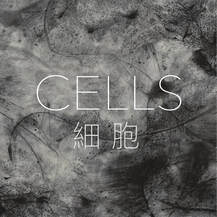
They develop from Ling's fascination with images found in biological and marine research, simulating the infinite trajectories of organic form evolution. Cells and microscopic images of water, air and earth are the starting point for Ling’s play of genesis control. For each work there’s a laborious process of image research, collection and manipulation. Strips of ink-jet printed cells are juxtaposed and layered following the strips' shape and pattern. As the thin fragments of cells group together to form organic constellations, ink strokes are applied to the painting's surface, enabling organisms to grow both in depth and texture.
 
These organisms impress for their poetical magnetism. They are endowed with that poetic bliss which offer a choice of possibilities and of indeterminate open-endedness. Coming from a variety of sources, the selected images differ in size, shape, colour and nature. By tearing them apart, into small and unidentified pieces, these fragments are detached from any pre-existing context and rendered visual devices for form creation. These are forms that don’t have a beginning or an end but find their uniqueness guided by a process of confined chance. They work as a kind of refusal,  ignoring any kind of conventional form of naming and knowing. They are instead able to speak of things that don’t yet have a language for, “opening the doors of perception to singularity”[1].


[1] Franco Berardi, The Uprising, Poetry and Finance, 2012
一切由海洋開始

​哲安麗


​​
​​​凌佩詩的作品具有豐富詩的意象,其形態帶有與佛朗哥貝拉爾迪(Franco Berardi)所形容之“無限期的重新開放,過度的言語含義成立了具有諷刺意味的行為”。她的混合媒介組成與任何形式的典型化或容易分類方法的對抗,相近於貝拉爾迪探索語言的政治性武器,而詩歌作為一種替代性的抵抗。他們都寧可呈現放蕩並列其中,從而研究形式創造所影響的機會。

凌佩詩迷戀生物與海洋研究發現的圖像,作品模擬有機形態進化的無限軌跡。細胞與水的顯微圖像,空氣和地球屬凌佩詩感應的起源。她對於的每一件作品都作費勁的形象研究,收集和處理。噴墨印刷的細胞線按照形狀和圖案並置與層疊。由於細胞組的碎片拼成星域,筆跡的運用使生物體形成深度和質感成長。

​這些生物體因隨意的偶發性而吸引。從所選擇的圖像在大小,形狀,顏色和性質,以至撕開微小與不明的碎片,這些碎片是從任何預先存在下呈現的視覺裝置。這些形式創作都是沒有開始或結束,而是生物體經驗自我獨特性和偶爾指導下的過程形成,作為一種拒絕常規形式,無視任何種類的命名。他們是一種能表達而還沒有一種語言的生物體 -“打開感知的大門,以不遵循已知自然規律而發生的奇點”。

​

​

[1] Franco Berardi, The Uprising, Poetry and Finance, 2012

​

ENDING = BEGINING

LING Pui Sze

​
​

​
Endings and beginnings are always happening at the same time. Cells, water, air and earth are the important elements for life. They dissolve after life comes to an end, while new life is formed by the dissolved elements. By using the images of cells, water and earth, I create new organisms on the canvas. Although the images are separated into different pieces, they merge and become a new one. I believe the process of collage is similar to the process of life - with the canvas merely the medium for the merging and dividing of different elements. I loves observing the different forms of creatures and of natural phenomena, especially relating to the ocean. As I am obsessed with the process of deconstructing and recomposing. My works show the organic forms continuously splitting and combining, like replicating the evolution of life.

When I was collaging ink-jet printing images, I do not treat it as a collage, but as a painting. I strive to merge thousands of pieces of paper into one scene. I have named this technique the “Free-style Puzzle” as the creation process is without a draft. Layers of paper and enlarged digital images of pixels create texture in my work. 

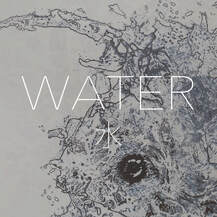
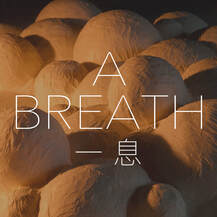
In the ''It all begins in the sea'' series, I developed the Cells series, Water series and Reproducibility series and A Breath series. The series of Cells started at 2012, influenced by her modern ink teacher Wucius Wong. I collage the ink-jet print paper of cells pattern and use Chinese ink to develop this series of work, including ‘Deep-sea Octopus’, ‘Plankton’, and ‘Expanding’. In 2013, I develop a new series of Water by collage the various form of water images. After a year of practice and development, I tried multi-layers of paper sticking and different color effect of ink-jet printing. Reproducibility series is the combination of both the Cells and Water series. I was also inspired by the nature during Taiwan residency and is developing A Breath series.


​
末 = 始
​
凌佩詩


​
​
始而末, 死即生。隨著環境變化, 生命的元素因死亡而分解, 重組而再生。我利用細胞及水土之圖像創造新生物, 縱使圖像在分裂, 同時亦在相生。我相信自然界中生命的過程與拼貼過程相約, 畫布只是各種元素分解與融合的載體。我喜愛觀察生物形態及自然現象, 對海洋生物由其熱衷。在拼貼作品前並沒有明確草圖, 排列方式只因隨著圖案本身之形狀及結構而連接, 順其自然地把紙張撕碎再合併, 重新拼合仿生物雛形。我喜歡解構與重組的過程, 作品所呈現因偶發性而組合有機形態正如生命演變過程, 細胞及水土圖像在畫布上重建另一個世界。

我在創作時並非視其為拼貼, 而是另一種繪畫方式, 沒有明確草圖, 如「自由式拼圖」般令數千張大小不一的紙碎合成為一個完整的畫面, 畫面的紋理是由多層紙張和數碼影像被放大後所像素所構成。

我在《一切由海洋開始》的系列中發展了
《細胞》,《水》,《再現性》以及《一息》系列。受到現代水墨老師王無邪影響, 我對水墨媒介的實驗性產生興趣, 2012年開始創作《細胞》系列, 我將細胞圖案以墨水打印方式打印在紙上再拼貼, 並以中國墨水加工, 此系列作品包括《深海八爪魚》、《浮游生物》、《擴張》等。於2013年我運用各種水的形態的圖案陸續發展出《水》系列。經過一年以來的練習和試驗, 我嘗試了多層紙張拼貼及各種墨水打印效果。2014年開始創作《再現性》系列, 利用《細胞》和《水》系列的作品圖像重組融合成再生的新圖像。期後亦因在台灣駐村時的受大自然啟發, 創作了《一息》。
​

Variations in the State of Nature - The Water Collection of LING Pui Sze

TAM Wai Ping


​

The use of experimental ink debuted in mainland China during the 1990s, manifesting a clear break with Chinese traditional painting theory. By abandoning cultural baggage and embracing ink instead as an experimental media, its use promoted art as pure practice. LING’s new Water collection embraces these principles, but is methodologically dissimilar to both ZONG Bing’s use of landscape painting as a spiritual, human domain, and also LAO’s philosophical pursuit of landscape, in which “Nothing in the world is weaker and softer than water, and when it comes to overpowering the hard and strong ones, water is second to none”. Rather, LING studies the subtleties of the world through scientific observation, and her paintings seem to reveal the world under a microscope:  cell division, aggregation, differentiation, stimulation, and after shredding, collage, to restructure another world and get closer to the rudiments of life between disintegration and creation.

LING’s paintings come close to ink, with the layout in black and white, lines form circles, bubbles, and various bubbles construct and regenerate. Non-traditional inked lines are applied with pieces of cell-imaged paper to become collaged into lines, and contingency determines the diffusion of image. This approach varies greatly from traditional practice and techniques originating in the calligraphic arts, and instead reflects a contemporary emphasis on the chance opportunities in daily life. This “contingency” plays a subversive role in LING’s paintings; her development of unusual lines forms a bridge between the past and present, also suggesting contemporary notions against reproduction and purposeful process.

Close examination of LING’s work evokes a feeling of paradox, initially with a hazy effect from scattered water ink, but then gray scale textures emerge as an enlarged pixel in a digital image. From a rational and logical perspective, mathematical formulas distinguish gray textures and black and white fields, but visually, the haze remains attractive as well. The difference between what is known and what is seen generates a unique picture, inviting viewers to experience a subtle fusion of the familiar and unfamiliar, again, characteristic of the times and the coexistence of experimentation in her work.

LING has undergone several stages of creation, with Deep Sea Octopus, Plankton, Expanding, Bursting, and Form, gradually establishing systems of her own creation. Yet, her work maintains a certain openness that I believe can be attributed to her choice in the origin of creation - in a state of nature. From Chinese philosophy, painting, and the western methodology of observing nature, to our contemporary struggle to understand, interpret and analyze it, nature remains constantly changing and in infinite variations. 


​
自然中的變化 — 凌佩詩的《水》系列畫作

譚維平


​​
實驗水墨於上世紀九十年代在大陸提出,明確從中國傳統畫論分離,捨棄了文化的包袱,將水墨作為實驗媒介,提倡純粹的創作。了解凌佩詩的近作《水》系列,也帶這種實驗水墨的特性,這跟宗炳的「山水以形媚道」不同,並沒有接合或追求聖人之道,如老子:「天下莫柔弱於水,而攻堅強者莫之能勝。」借山水講求道理。凌佩詩從科學觀察,觀察細微世界,畫作像看顯微鏡下的世界 —細胞分裂、聚合、分化、刺激,也因此套用細胞圖案,經過撕碎、拼貼、重組出現另一世界,在解體和建構中,嘗試接近生命的雛形。

凌佩詩的畫作擬似水墨,而非水墨。畫面以黑白布局,線條構成一圈圈的泡沫,接續大小泡沫的出現,構造出再生的場域。線條非為傳統的筆墨,而是把細胞圖像的紙張撕碎後再拼合成為線條,偶然性決定畫面的擴散,我覺得這種偶然性或偶發性相當重要,它分隔中國傳統講求書寫線條的技法,而直接使用當代生活中出現的偶然機遇。偶發性帶有顛覆作用,將講求線性發展的承上啟後傳統,改變為當代非線性的多元發展,它容許非再現的圖像、非目的性的進程、混雜替代了單元,本質上它就像這時代的特質。而凌佩詩的畫作具備了這些特質。
細看凌佩詩的畫作,出現一種似是而非的感覺,最初以為是水墨暈散後出現朦朧的效果,再看應為數碼影像被放大後「像素」(pixel)的紋理灰度,紋理灰度的數學程式區分黑白色域,背後是理性的邏輯,但視覺上還是被那朦朧的感覺所吸引,出現所知和所見的差距,反而造就出獨特的畫面,正是這種原因,讓觀者進入既熟悉又陌生的體驗,讓時代性和實驗性並存於作品中。

凌佩詩經歷過幾個階段的創作,作品包括《深海八爪魚》,《浮游生物》,《擴張》、《裂開》和《形態》,漸漸建立出自己的創作體系,雖然如此,她的創作還保持一定的開放性,我相信這歸於她在創作原點上的選擇,選擇以自然為題,無論在中國哲學、繪畫或西方的自然觀察,以至當代對自然的掙扎,都能以不同面向了解、進入、分析和欣賞自然,因為自然包含了萬變之道。


Copyright © Ling Pui Sze 凌佩詩
Powered by Create your own unique website with customizable templates.